![[:de]Grandgourmand, Travel, Food, Lifestyle[:]](https://grandgourmand.de/wp-content/uploads/2023/01/logo_23_1-1.png)

A mosaic of aromas
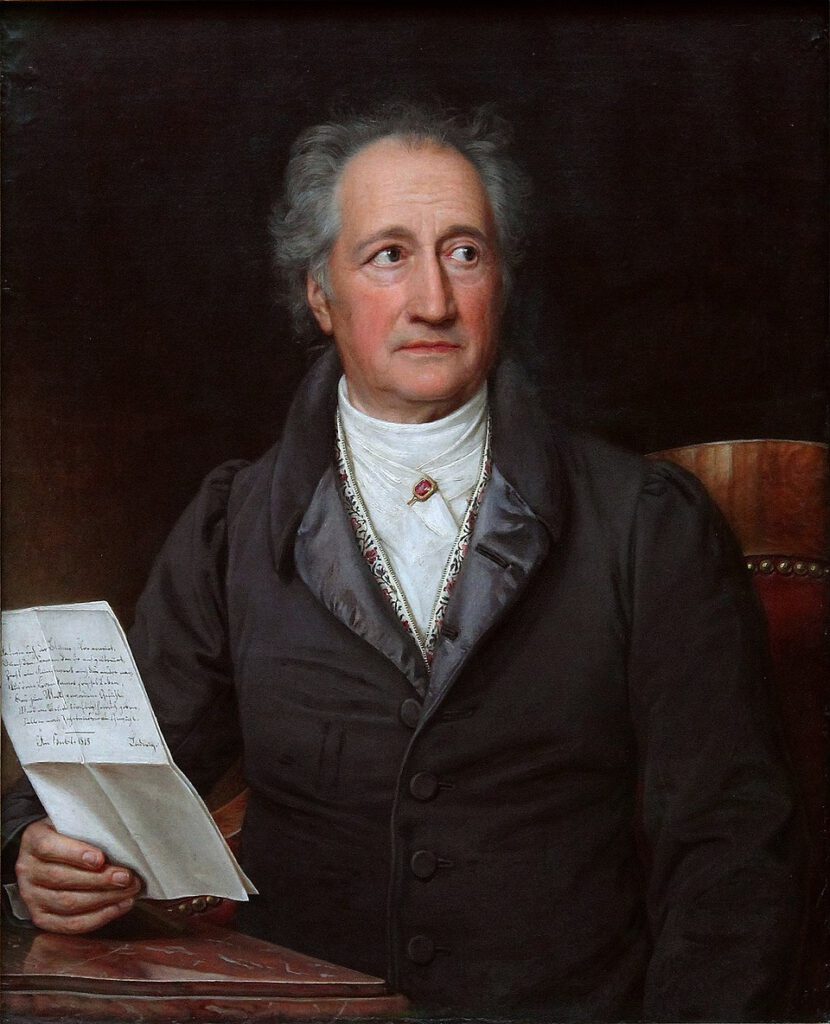
Italy without Sicily makes no picture in the soul: only here you find the key to everything.
You cannot praise the climate enough; it is now the rainy season, though sometimes breaking off; today it thunders and lightens, and everything forceful turns green. The flax has partly formed knots, the other part is in blossom. In the hollows one might think to see small basins, so beautifully blue-green lie the flax fields below. The charming things are countless.
Johann Wolfgang von Goethe, Italian Journey, Volume 1, Palermo,
13 April 1787
by Mathias Guthmann
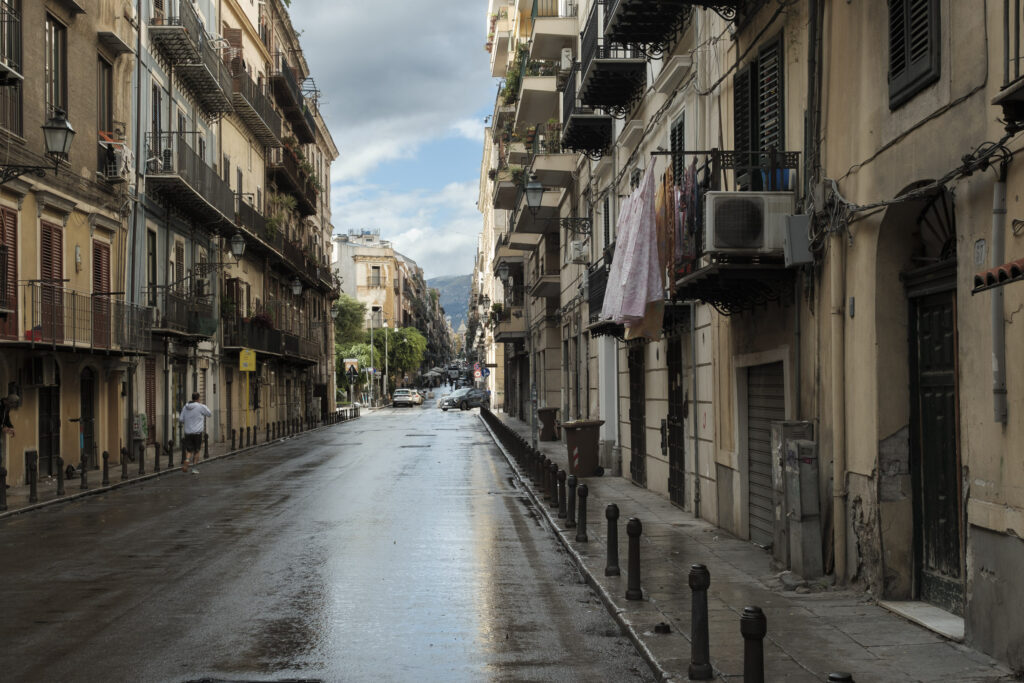
The moment he arrives in Palermo, the traveller is struck by a Mediterranean city alive with colour, scent, and unceasing movement.
He is immediately drawn into a melting pot of cultures shaped by a long and shifting history.
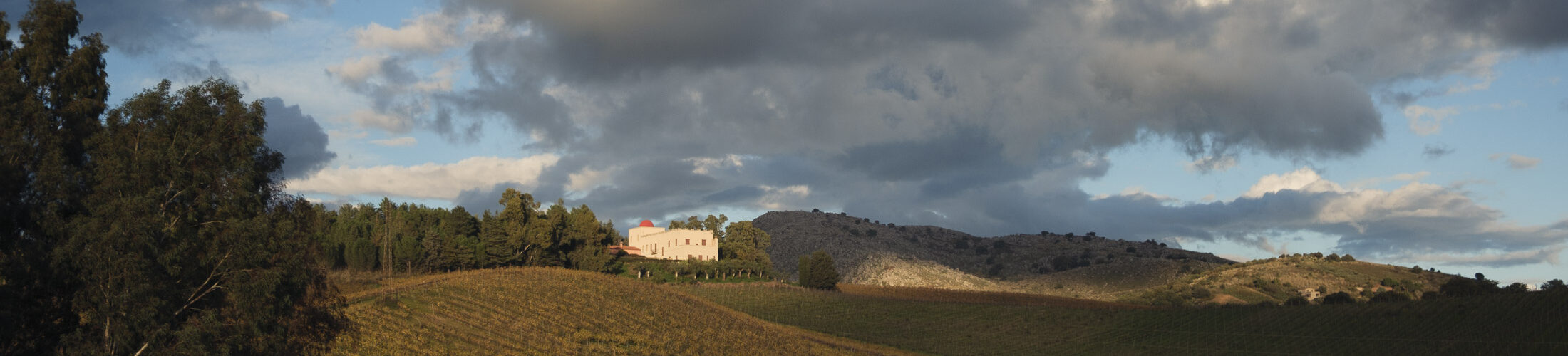
Once he leaves behind this maze of alleys and squares, small villages carved into the rock, bizarre mountain formations and wide open plains stretch out across the landscape.
Sicily reveals itself as a mysterious little universe waiting to be explored.
Founded by the Phoenicians, the city has seen countless dynasties, rulers and peoples come and go through the centuries.
It experienced a remarkable cultural flowering under the Normans.
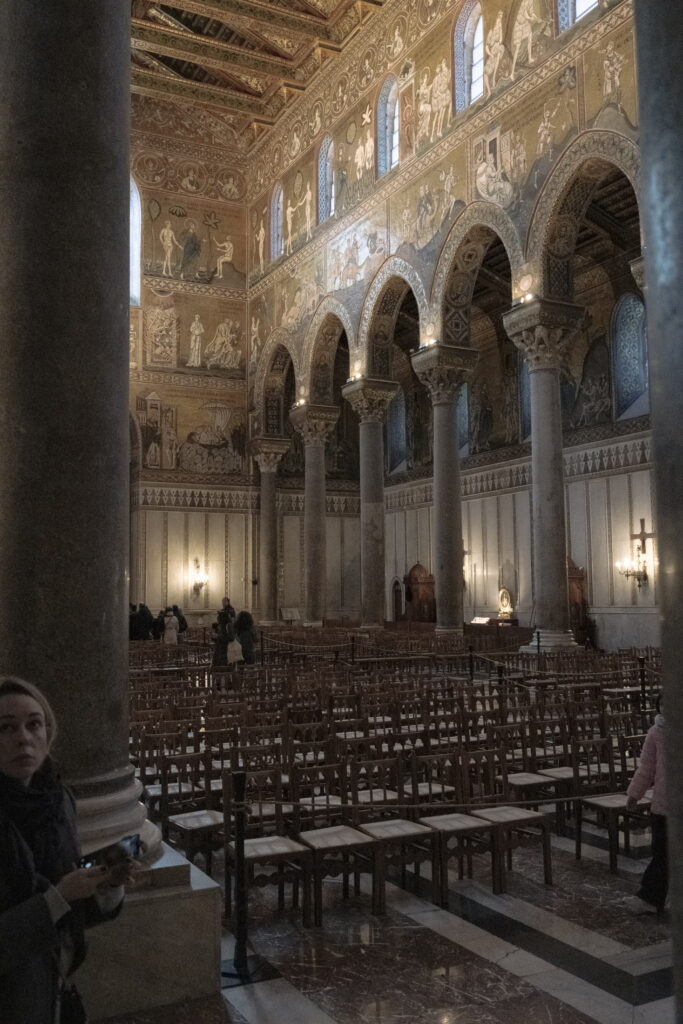
This is most vividly felt in the Cathedral of Monreale, perched above the city – sublime architecture and art.
Around 600,000 people live in the Sicilian capital; the harbour remains a major economic force.
Agriculture and tourism also play significant roles.
And, of course, so does wine.
A press trip with an international cast
I cannot help referring once again to Goethe’s Italian Journey.
To secure the financing of his trip, the great poet negotiated with his publisher Göschen in Leipzig before leaving Karlsbad; the first collected edition of his works was to be published. A fee of 2,000 talers was discussed – and agreed upon.
After Duke Carl August continued to grant Goethe his ministerial salary at the end of 1786, the financial means were finally secured; the journey could finally begin.
I am invited by the Sicilia DOC Consorzio di Tutela Vini – Goethe or no Goethe.
In this essay, I will paint a picture of winegrowing in Sicily for you.
With the tones, aromas and nuances that light up the canvas of this land from Agrigento to Catania, from Palermo to Trapani and even in Vittoria.
A picture composed of wind, sun and rain, of the mountains, and of course of the people who work every day to vinify their wines with honesty, finesse, elegance and skill.
What is the Sicilia DOC Consorzio di Tutela Vini?
The controlled designation of origin Sicilia DOC was introduced in 2011.
In 2012, around 3,000 winegrowers, winemakers and bottlers founded the “Consorzio di Tutela Vini DOC Sicilia”, which is officially recognised by the Ministry of Agriculture. The consortium protects and promotes the Sicilia DOC brand, monitors compliance with production regulations, informs consumers and plans the marketing of the wines in order to strengthen the development of Sicilian winegrowing.
In 2014, the association was recognised by ministerial decree to carry out tasks related to protection, promotion, enhancement and consumer information, as well as to exercise “erga omnes” functions.
Key data (as of 2024)
- 20,595 hectares under cultivation
- 7,264 winegrowing enterprises
- 500 bottlers
- approx. 82 million bottles produced
Sicilian vineyard acreage, at just under 97,000 hectares, is among the largest in Italy. It is three times the size of, for example, the cultivated vineyard area in New Zealand and only slightly smaller than the total vineyard area of Germany.
Sicily – diversity of landscapes
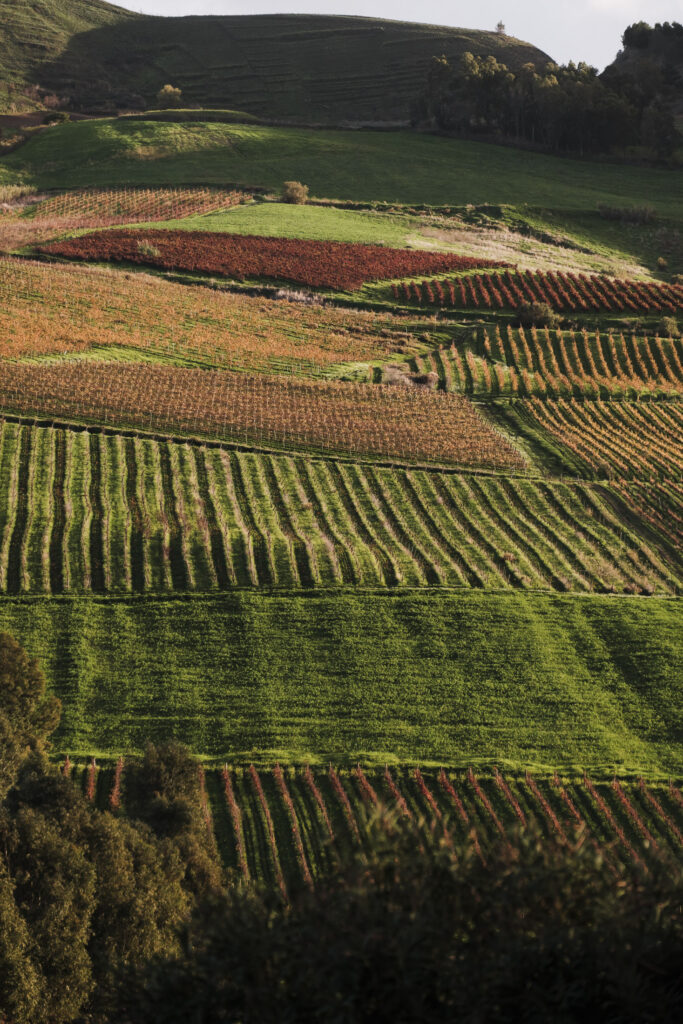
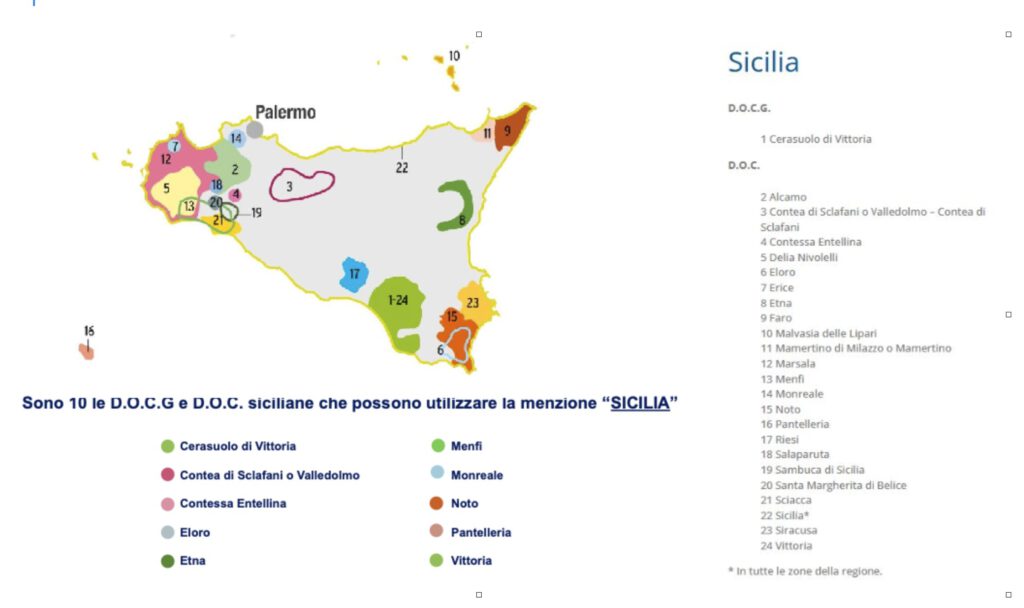
The island has the shape of a triangle, whose sides extend into the Tyrrhenian Sea in the north, the Strait of Sicily in the south and the Ionian Sea in the east. It is a hilly island, mountainous in the north and interspersed with plains along the coasts. The region also includes numerous smaller islands, among them the Aeolian Islands, Ustica, the Aegadian Islands, Pantelleria, and the Pelagie Islands with Lampedusa and Linosa.
In the northeast rise the Sicilian Apennines with the Peloritani, Nebrodi and Madonie mountains, where Pizzo Carbonara (1,979 m) forms the highest peak on the island after Mount Etna. Mount Etna lies in the northeast and, at 3,350 metres, is one of the largest active volcanoes in the world.
The climate is typically Mediterranean: hot summers, mild and rainy winters.
Map of the wine-growing regions of Sicily
The itinerary
… is very well curated. A symposium by SOStain, an organisation explicitly dedicated to the subject of sustainability, will be covered in a separate article; it would go beyond the scope here. What can be said is that SOStain takes the tasks it has set itself in the field of sustainable agriculture very seriously.
Masterclasses, winery visits, culinary highlights, cultural treasures.
Ah, and not to forget colleagues from all over the world: a large group of excellent journalists, curious, experienced, expectant – and, of course, good conversations, what gives any worthwhile press trip its flavour.
Masterclass I
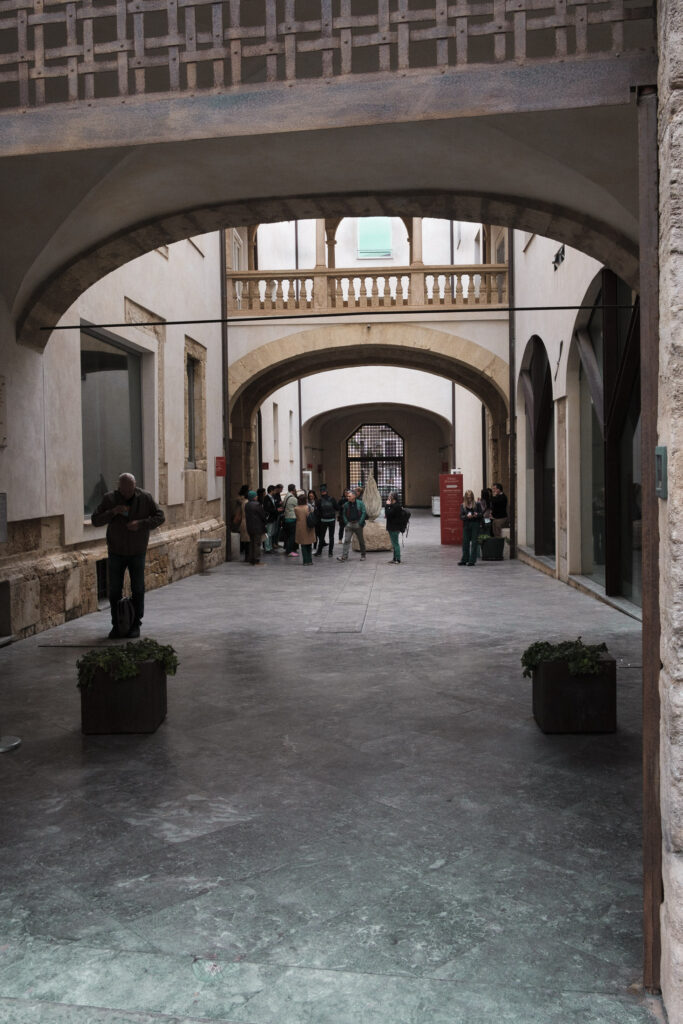
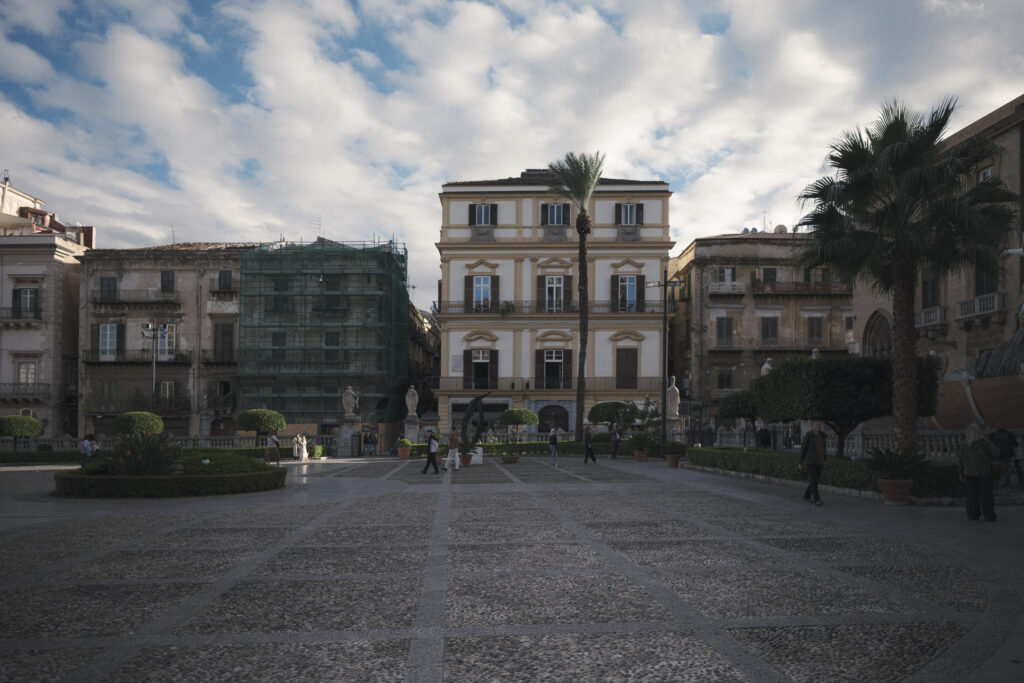
The masterclasses take place in Palazzo Branciforte. An aristocratic setting
In the mid-17th century, the heirs of the Count of Raccuja began expanding the residence and received permission from the Senate of Palermo to incorporate what had previously been a public street into the architectural structure — still clearly recognisable today. Such things are possible only with money, power and influence.
At the beginning of the following century, after work that almost doubled the size of the estate, the old Palazzo Raccuja — also known as Pietraperzia or Butera — had become one of the most opulent aristocratic residences in the city.
What a magnificent building! A worthy setting for the events to come.
Soil characteristics
Sicily is the largest island in the Mediterranean and the southernmost region of Italy. It covers an area of 9,444 square miles, more than 25,000 square kilometres.
Thanks to its size, its geographical position and its long and rich historical development, Sicily possesses a complex and diverse morphology and culture.
Varied soils — a true paradise for wine lovers; terroir, as so often, is the magic word.
Autochthonous grape varieties form the backbone of winegrowing. Robust vines that are suited to the demanding climate — in every sense.
In the mountains, a harsh wind often blows; hot, rain-poor summers place considerable demands on winemakers, vines and grapes alike.
- There are soils on hard magmatic and metamorphic bedrock of Apennine type in the area around Messina.
- The world-famous volcanic soils surrounding Mount Etna.
- There are also the calcareous and sedimentary hill soils of Calabria and Sicily, as well as the alluvial and coastal plains that extend as far as Palermo, along the entire northern coast and deep into the mountainous interior.
- Fine-grained siliceous calcareous sediments and magmatic rocks are found in the area around Syracuse and Vittoria.
- From Vittoria to Agrigento and up to Trapani one encounters clayey flysch, limestone, sandstone and chalk.
- And finally — around Catania — fluvial alluvial plains reaching to the coastal areas.
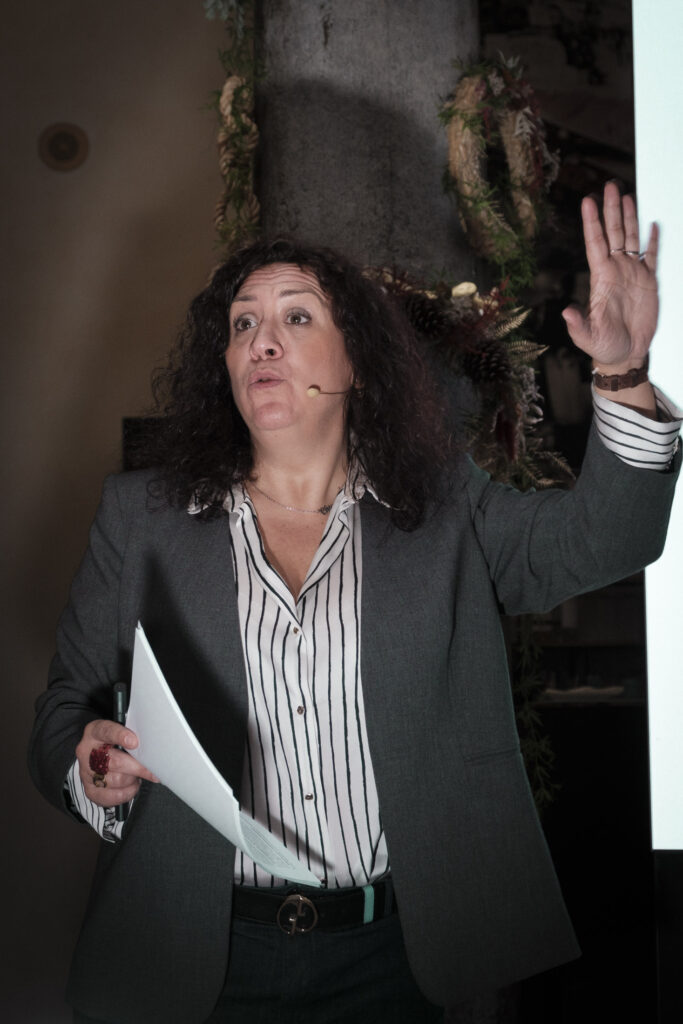
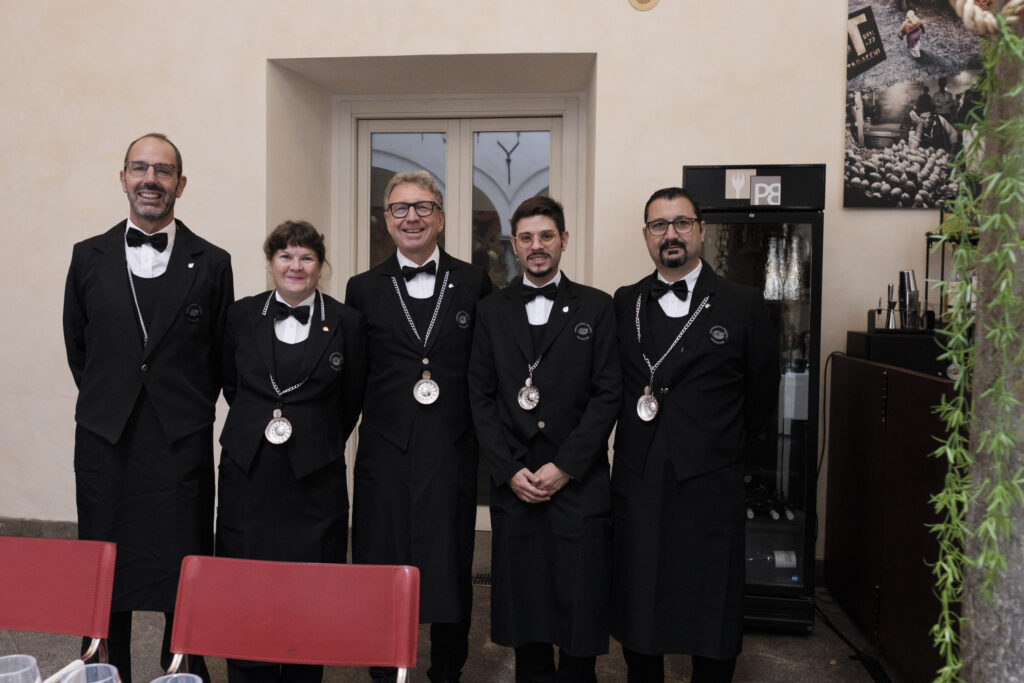
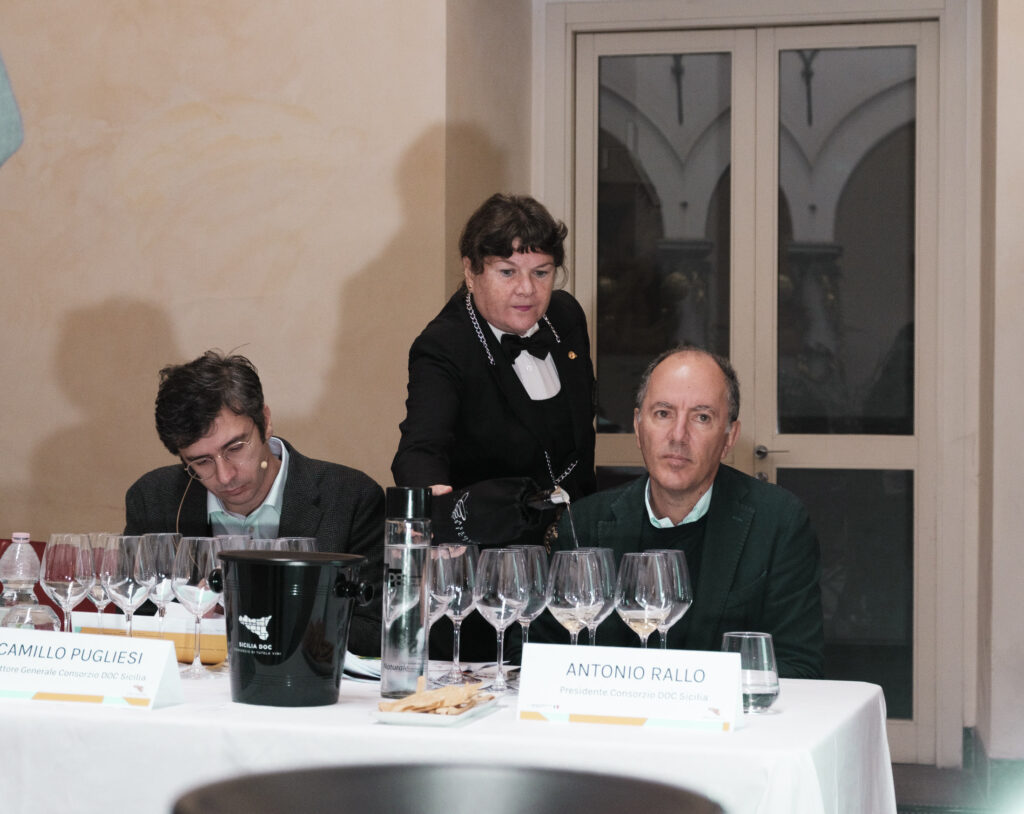
Chiara Giovoni leads the masterclass. The internationally recognised sommelier is a master of her craft. She describes the DNA of Sicilian wines to perfection.
A wine tasting in the morning? My thoughts turn to Ernest Hemingway. He once said:
“Drinking wine was neither snobbery nor a sign of sophistication nor a cult. It was as natural as eating and just as necessary for me …”
What applies to Hemingway does not have to apply to me. It is a matter of maintaining clarity of mind. All wines presented are tasted in such a way that, in the end, the evaluation is as objective as possible. Tannins, aromas, depth, finish, etc. Hard work.
Only a small sip from each glass; yet a little must run down the throat in order to sense the depth.
Water, always water – that is my rule at such events.
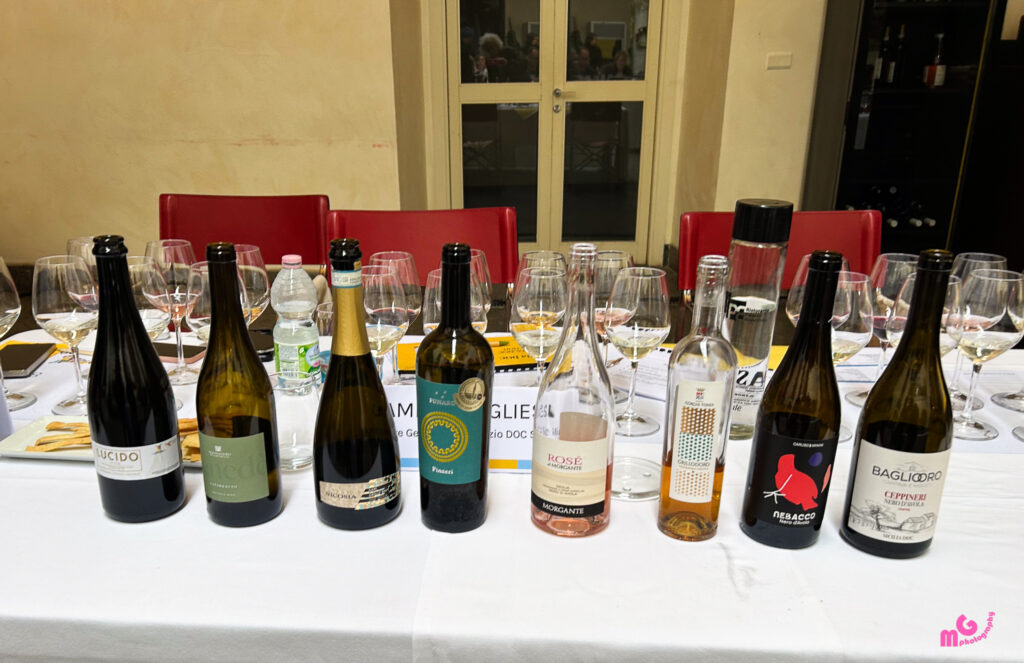
Nero d’Avola
A dark wine, enigmatic, full of depth, complex, intense.
It’s easy to become friends with the Nero, exploring the labyrinth of its aromas. Despite its pronounced, sometimes contrapuntal tannins, it leaves ample space for the fruity notes to breathe – especially when a skilful winemaker accompanies the vines from the vineyard to the moment they are bottled.
Cherry, strawberry and ripe fruit, pepper notes and hints of fresh, spicy vegetables – that is how I would describe the chord of a well-made Nero d’Avola.
Powerful modulations from cheerful C major to festive D minor: Nero can reveal itself in the glass as a true bravura piece.
The longer one engages with it, the more finely its pointed nuances rise to the nose.
The past twenty years have seen considerable change. Whereas Sicily was once known primarily for inexpensive mass-produced wines, the focus today is on sustainable and high-quality viticulture.
Sicilia DOC aims to produce wines that one can open at any time: fine, fresh, elegant, effortless to drink.
The mosaic of the island in a bottle – an excellent idea.
Grillo
Grillo today forms part of numerous DOC wines in central-western Sicily. Thanks to its qualitative virtues, the variety has in recent years established itself in other parts of the region as well—above all in the province of Agrigento, and to a lesser extent in Palermo, Caltanissetta, and Syracuse.
The wine shows an intense yellow with greenish reflections. On the nose it is highly aromatic, marked by typical citrus notes such as grapefruit, complemented by spicy-herbaceous accents and white blossoms. Nuances of passion fruit also appear. On the palate it presents itself as full-bodied, with a well-balanced structure of acidity and alcohol. Its pronounced aromatic length is typical.
A wine as light and buoyant as a beautiful Sicilian woman on her way to a loving rendezvous with her friend.
From a culinary perspective: It pairs wonderfully with a fresh trout, a few pistachios, some butter, and a few drops of olive oil.
Catarratto / Lucido
In more recent times, Sicilian winemakers were confronted with a problem: the name Catarratto proved difficult to pronounce outside Italy and was therefore difficult to promote.
To address this issue, the ministerial decree of 21 November 2018 permitted, exclusively for the designation of wines made from grapes harvested in Sicily, the use of the name “Lucido” on the label.
This term is by no means new: it had already been used earlier as a synonym, in particular for Catarratto Bianco Comune or Catarratto Bianco Lucido.
Catarratto (Lucido) wears a straw-yellow robe with greenish reflections. On the nose it is complex, often intense, marked by floral and fruity notes accompanied by citrus fruits, tropical aromas, and a delicate spiciness.
For me personally it has decidedly more character than Grillo, but: different noses, different notes.
If I—much as I like to do—were to distinguish Grillo and Lucido in musical terms, Grillo would be a graceful bossa nova: rhythmic, light, with wistful chords.
Lucido, by contrast, I would place among the ranks of a Chopin waltz.
A good wine.
On the palate, Catarratto presents itself with good body and persistent aromatics; the balance between acidity, fruit, and structure is characteristic of the variety. Depending on provenance and maturation, it appears somewhat more robust or shows a slightly more pronounced alcoholic note. The editions I have tasted myself were all of excellent quality.
A Journey to the Alessandro di Camporeale Winery
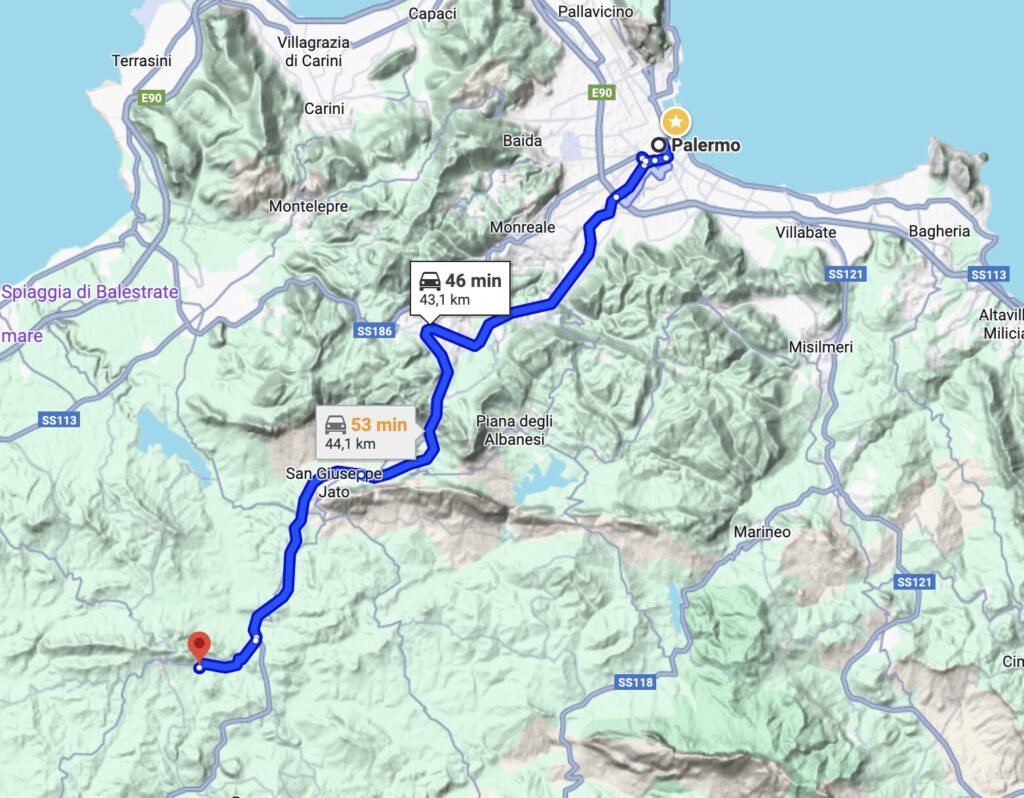
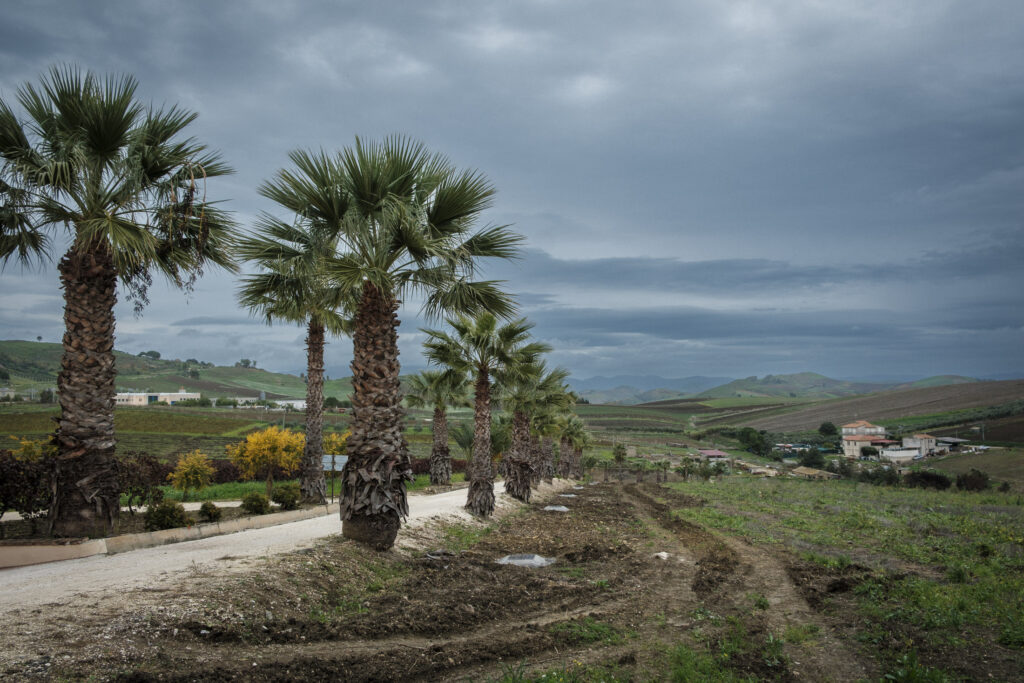
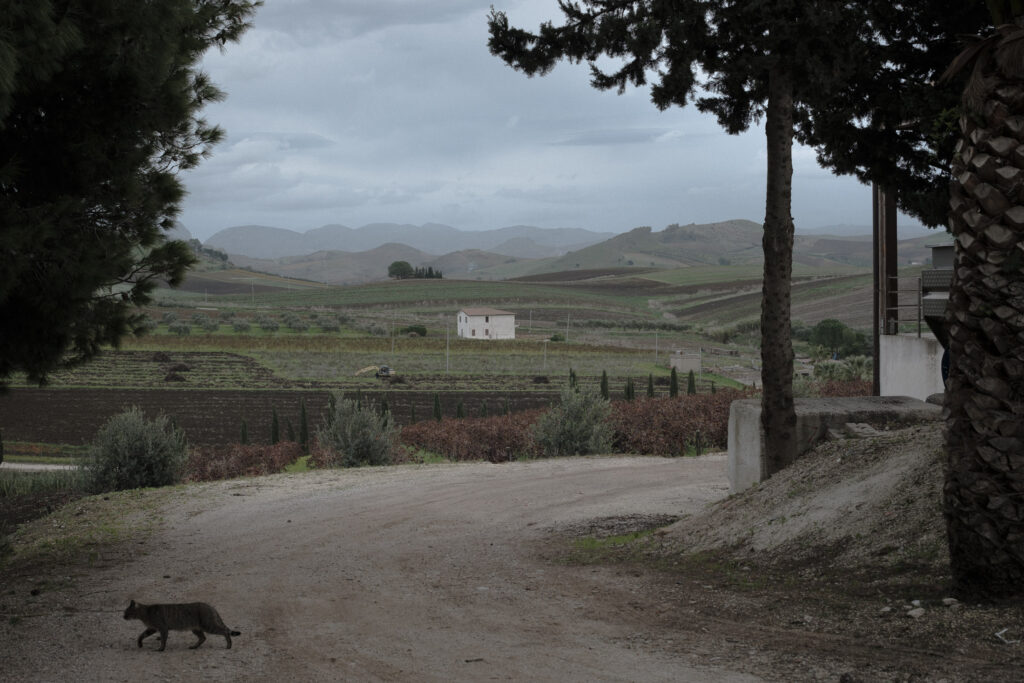
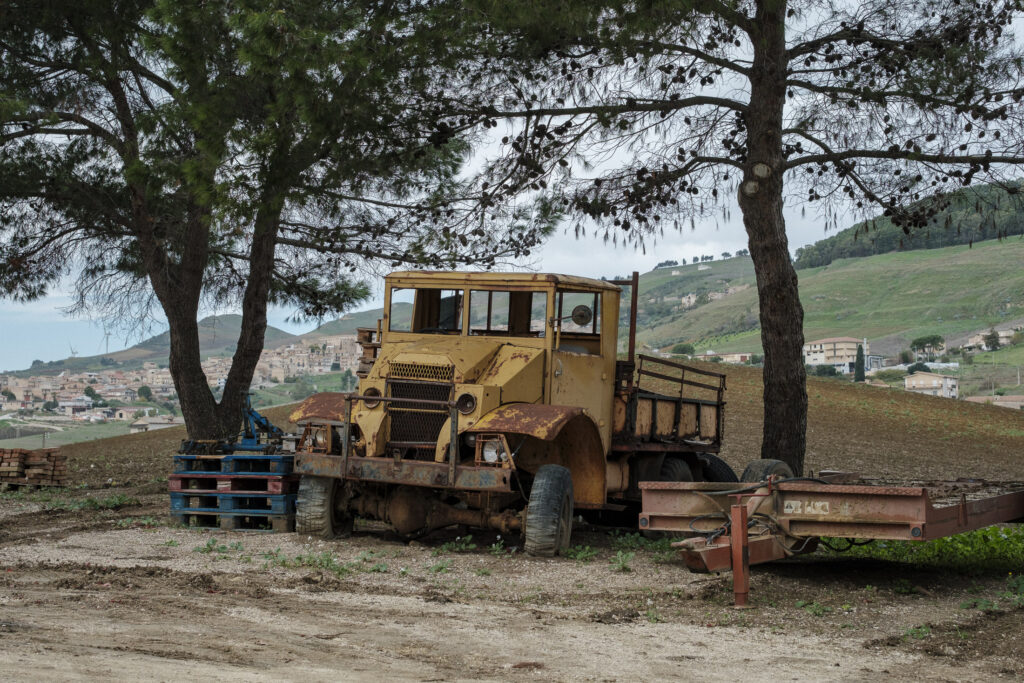
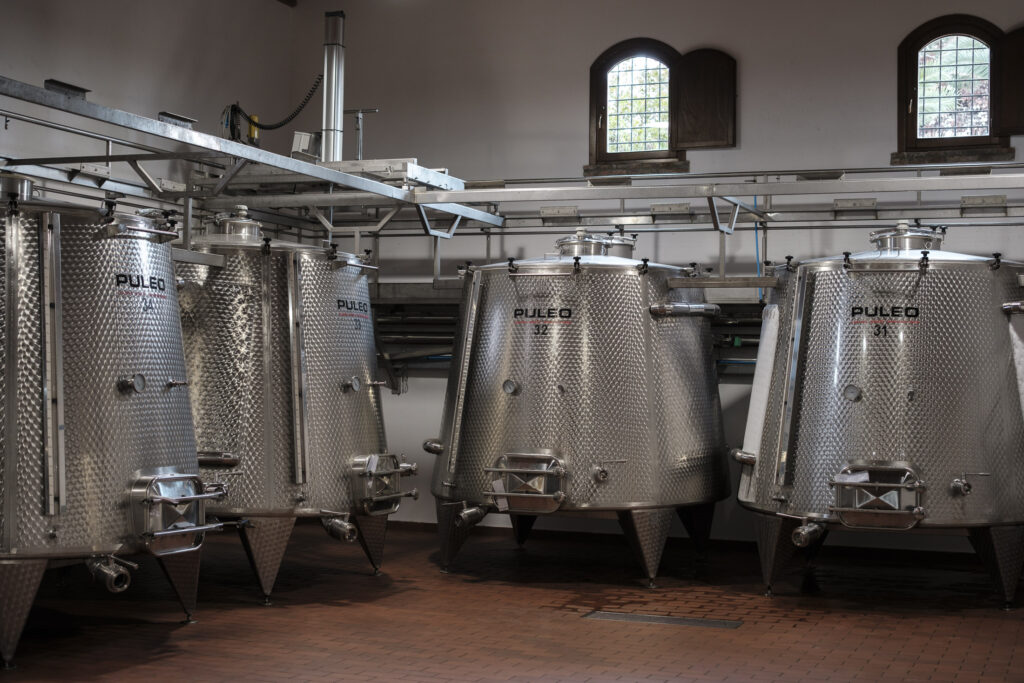
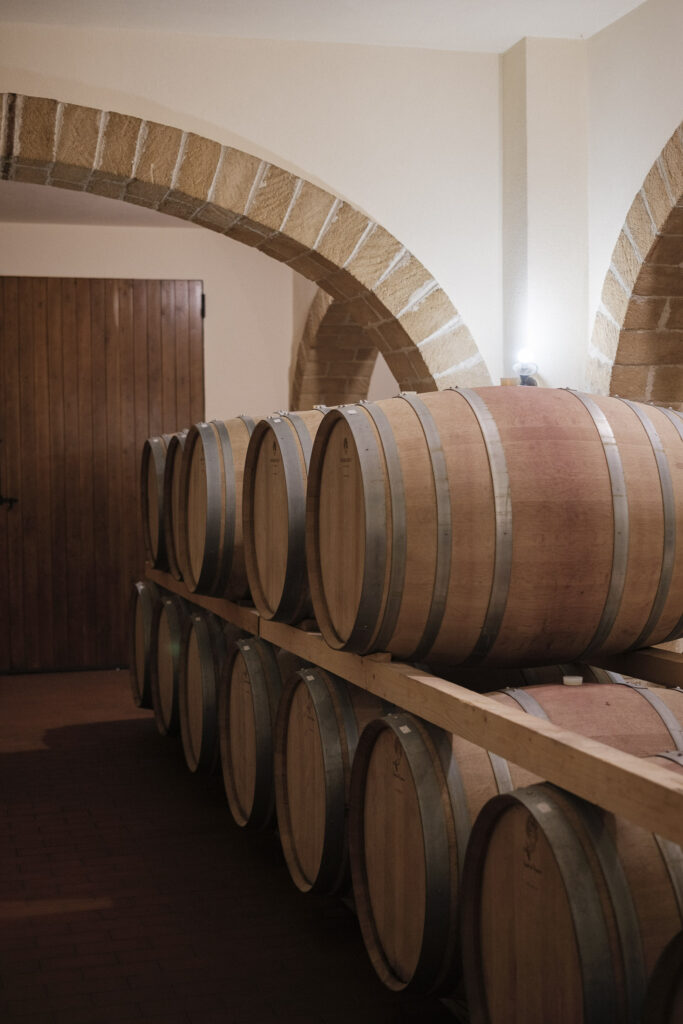
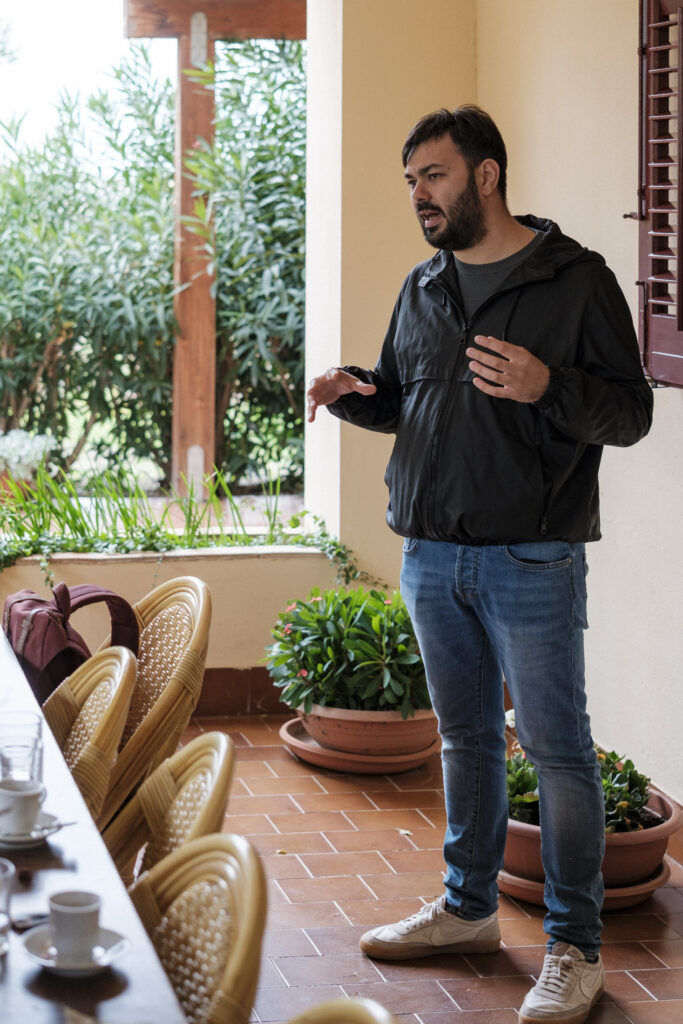
he town of Camporeale lies 46 kilometres west of Palermo and is regarded as a hotspot for viticulture in the region. The Alessandro di Camporeale winery has been run by the family there for four generations. Benedetto Alessandro is an enthusiastic winemaker on the family-run estate, which is known for its high-quality organic wines—wines that unite tradition and modernity with ease. A particular highlight is the cuvée “Benedè,” a fresh Catarratto.
Together with his cousins Benedetto Alessandro, Anna, and the fathers, he continues the family’s winemaking tradition, which draws on more than a hundred years of experience and the unique soils around Camporeale.
With expertise, Benedetto Alessandro explains to us the idea behind his wines.
Sustainability stands foremost.
Fortunately, the climate cooperates: the summer days, as everywhere in Sicily, are very hot, yet the cool nights give the vines the opportunity to recover. The average lifespan of a vineyard parcel here is around forty years.
Once the vines of the Contrada Mandranova no longer deliver the desired yield or the targeted quality, these parcels are taken out of production and allowed to regenerate. The land is given time—in the spirit of biodynamic agriculture.
The Benedè Bianco Sicilia DOC, 100% Catarratto, is very good. The wine matures in steel tanks, comes from vines at various elevations, and convinces by its elegance.
Its radiant straw yellow, the subtly bitter almond notes, and the fruity accents of white peach and orange or citrus blossoms give this lively, fresh wine an exceptionally pleasant character.
A clear recommendation.
It pairs wonderfully with a dorade marinated with a touch of garlic and a dash of Sicilian lemon juice—with a hint of rosemary added, and the creation is ready to be served.
Masterclass II
Hidden Gems: Indigenous grape varieties beyond the classics
…is the theme of the second masterclass, again led by Chiara Giovoni, this time joined by the oenologist Giuseppe Figlioli (Consigliere del CdA del Consorzio di Tutela Vini DOC Sicilia, Vice Presidente Assoenologi Sicilia).
Inzolia
Perhaps the vine is indeed of Sicilian origin, although Giovan Vettorio Soderini lists it around 1590 among the varieties cultivated in Tuscany under the name Ansorie.
Fabio Giavedoni, one of Italy’s best-known wine critics, and Maurizio Gily, an equally renowned wine blogger, affirmed in 2005 that Inzolia has its roots in Sicily and from there first made its way to Sardinia and later to the islands of Elba and Giglio.
Other hypotheses consider Inzolia to be identical with the Irziola mentioned by Pliny and therefore assume a Greek origin.
The genetic profile seems to confirm this thesis.
Either way, the aroma of this white wine is lightly nutty and delicately fruity. It sets accents with ripe peach, apricot, and pear; the bouquet also includes tropical notes such as pineapple and vanilla.
Ideal as an aperitif, Inzolia pairs wonderfully with seafood, shellfish, and all fish dishes, particularly grilled squid and fried bluefish.
I would describe it—as a Frenchman, raised on the plains of Bordeaux, might—as a typical vin de soif: a light wine with which, well chilled, you may gladly quench your thirst in summer. Properly crafted, many a bottle reaches a remarkably good level.
Zibibbo
The name “Zibibbo” points to the African origin of this Muscat d’Alexandrie and to a particular use of the grape, for zibibh means “raisin” in Arabic. Perhaps it is also a reference to the place Zibib in Tunisia, not far from Pantelleria.
Zibibbo is an aromatic white variety that can captivate with its intense bouquet of citrus fruits, apricots, and floral notes.
For me it is interesting—no more and no less, and I say that with all respect.
Such is the case when one has already tasted excellent Neros and Catarrattos beforehand.
Frappato
A family wine par excellence.
At this point I recommend a delightful little game, one that can be played anywhere with a good bottle:
Compare—drawing only on memory—the wine in your glass with the music you love. Sense the rhythm, listen to the melody, feel the bass, recognise the chords. You will be surprised to find that the message suddenly appears, like a spacecraft landing unexpectedly.
All at once you find yourself looking into a previously unknown universe, travelling at the speed of light from galaxy to galaxy. It is a marvellous experience—quite independent of whether you listen to classical music, jazz, pop, rock, or anything else: it works.
A small technical device that has accompanied me through twenty years of culinary exploration:
attack, plateau, decay, and sustain.
What happens first? How does the wine behave on the palate? How does it run down the throat, and what resonance does it leave behind?
One more small literary recommendation: Theodor W. Adorno. His posthumously published Aesthetic Theory is concerned with art and its social contexts.
Back to the topic: no winery forgoes including either a spumante or a rosé in its portfolio—ideally a pale rosé spumante.
It can be enjoyed in summer or winter, at the beach, in a bar, at home.
Frappato is distinguished by lightness and freshness—yet in my view, even in very good interpretations, it never attains the depth and structure of a properly matured Nero d’Avola. Scusate, cari amici del Frappato!
Also discussed was Perricone, a variety cultivated particularly in the provinces of Palermo and Trapani.
Baglio di Pianetto
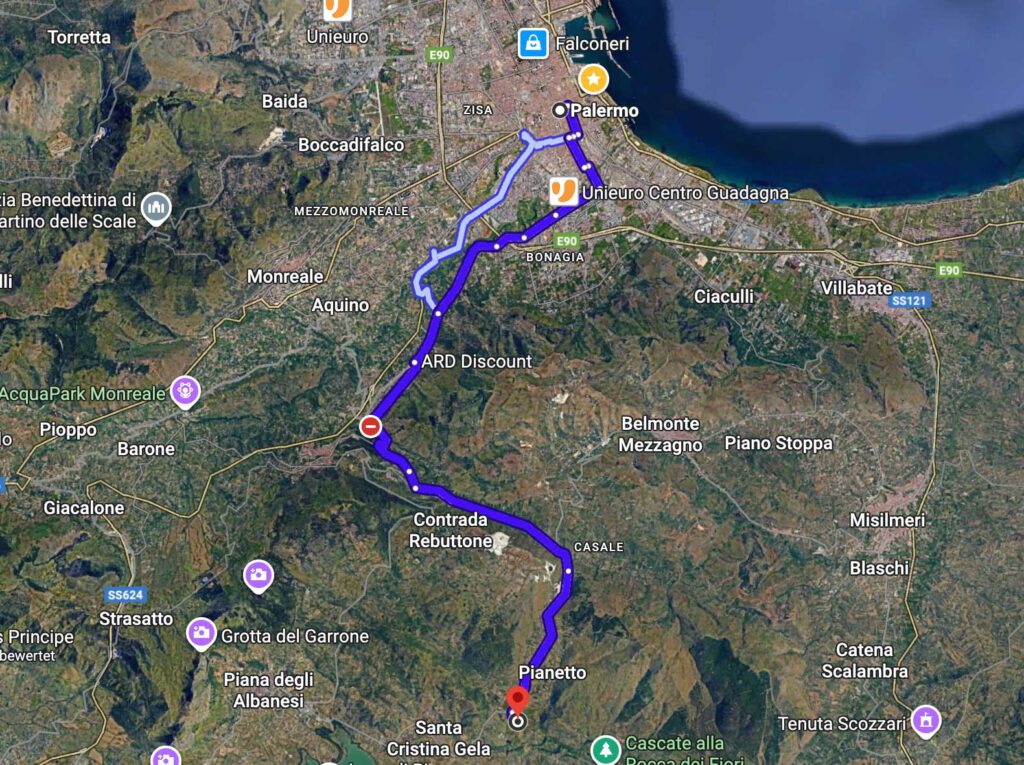
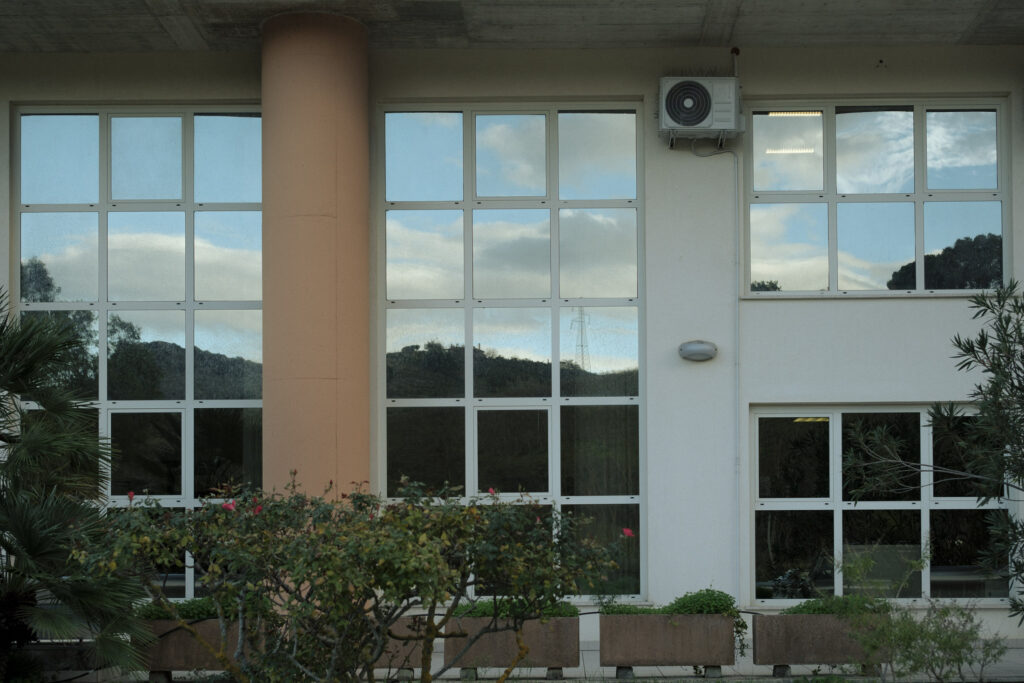
he large estate Baglio di Pianetto lies in a natural amphitheatre at an altitude of roughly 900 metres, not far from Piana degli Albanesi, about 25 kilometres from Palermo. The town of Piana degli Albanesi was founded in 1488 and bore the official name Piana dei Greci (Plain of the Greeks) until 1941, owing to the Byzantine rite of its church.
Today the town bears the official name Piana degli Albanesi, commonly also called Hora e Arbëreshëvet (Town of the Albanians). Between 1944 and 1945, Piana degli Albanesi became an independent republic for fifty days.
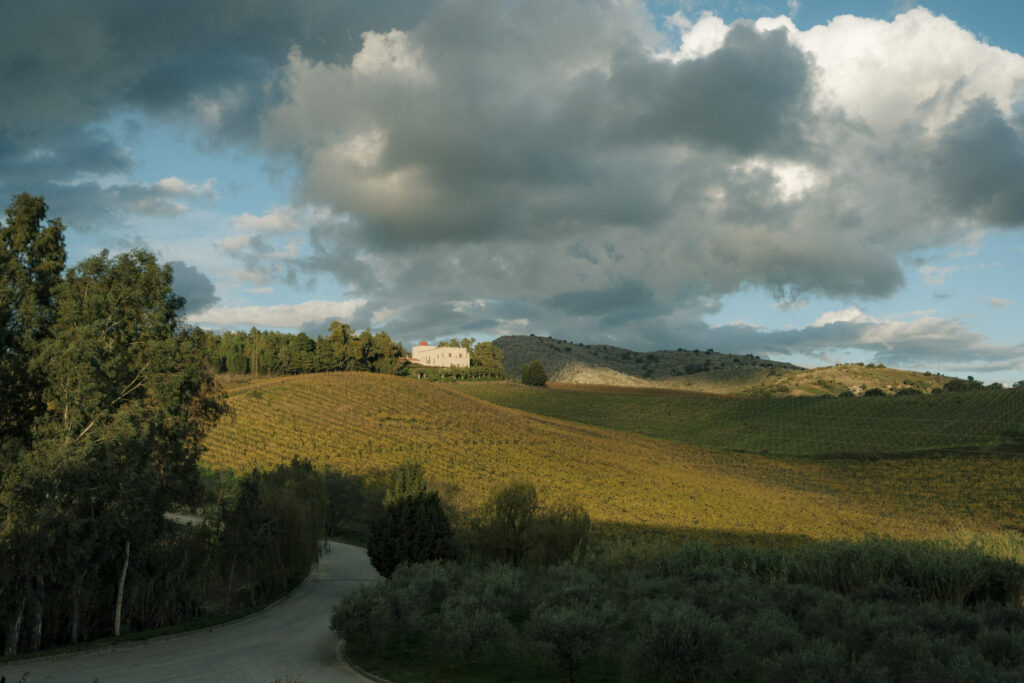
The Baglio di Pianetto estate pursues a sustainable approach with its biodynamic cultivation—the guiding thread of this press trip.
In view of climate change and the associated challenges for agriculture, this is an important step in the right direction.
Where Baglio di Pianetto once sought aromatical citations from high-class international wines, in recent years it has reconsidered its orientation and now follows a different concept.
The Sicilian terroir is reflected—and the conditions for this could not be better.
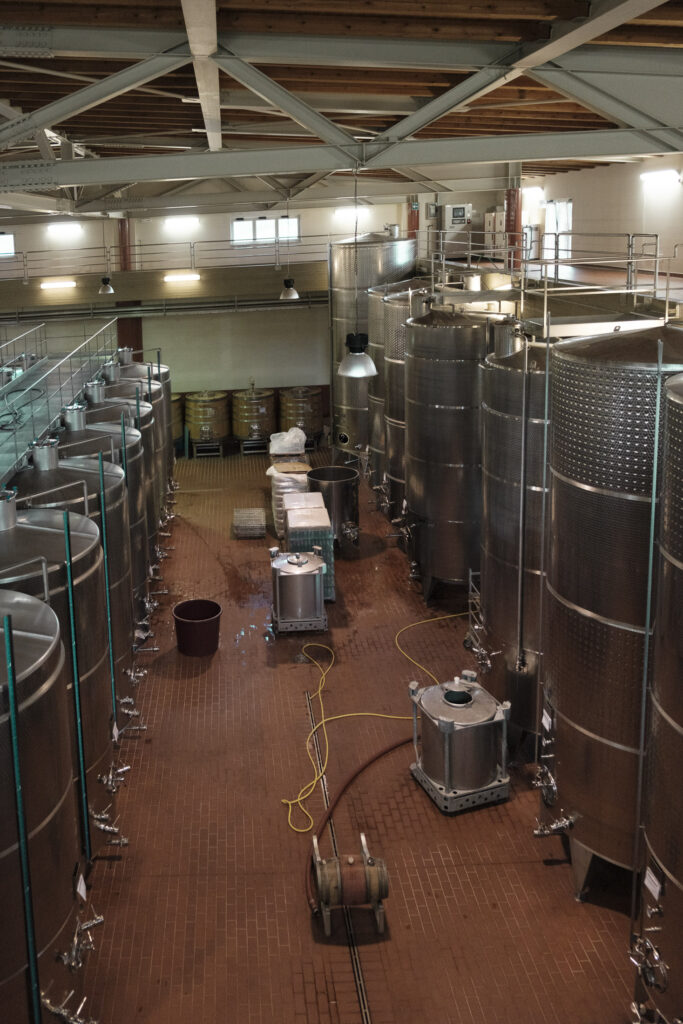
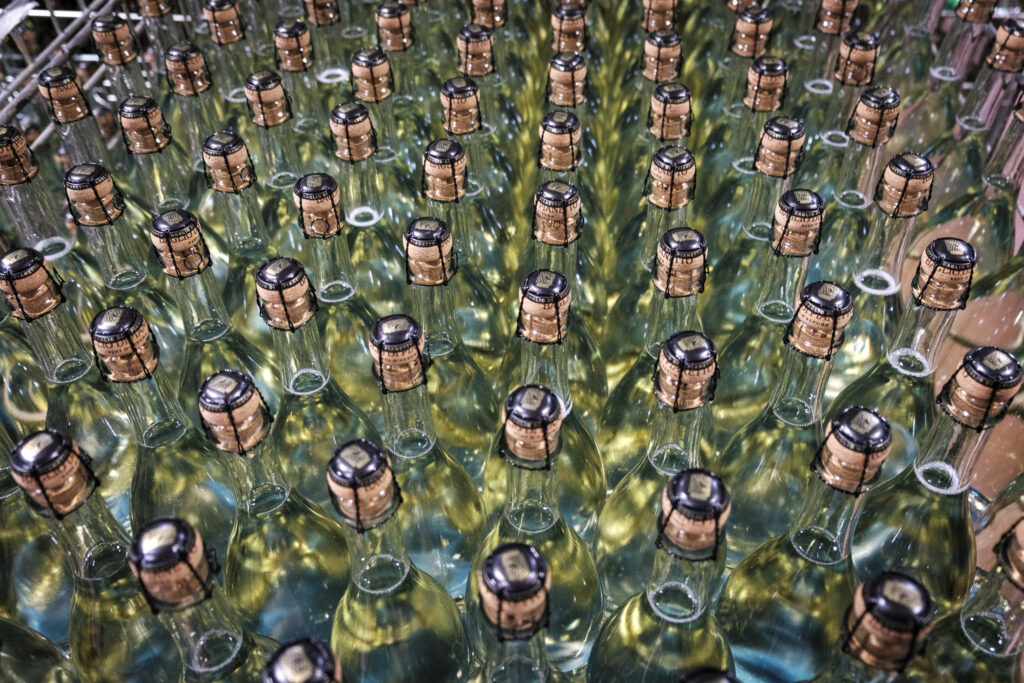
Grillo, Insolia, Viognier, Syrah, and of course Nero d’Avola are produced here.
Viafrancia is the estate’s signature line.
The vineyards lie in a hilly amphitheatre that encompasses the areas of Santa Cristina Gela and Piana degli Albanesi. The soil is clayey and rich in minerals. The climate is marked by large temperature differences. This gives rise to a wine with a very distinctive aromatic profile.
The estate was founded in the 1940s by Count Paolo Marzotto; with passion and devotion, wines of excellent quality were soon being vinified.
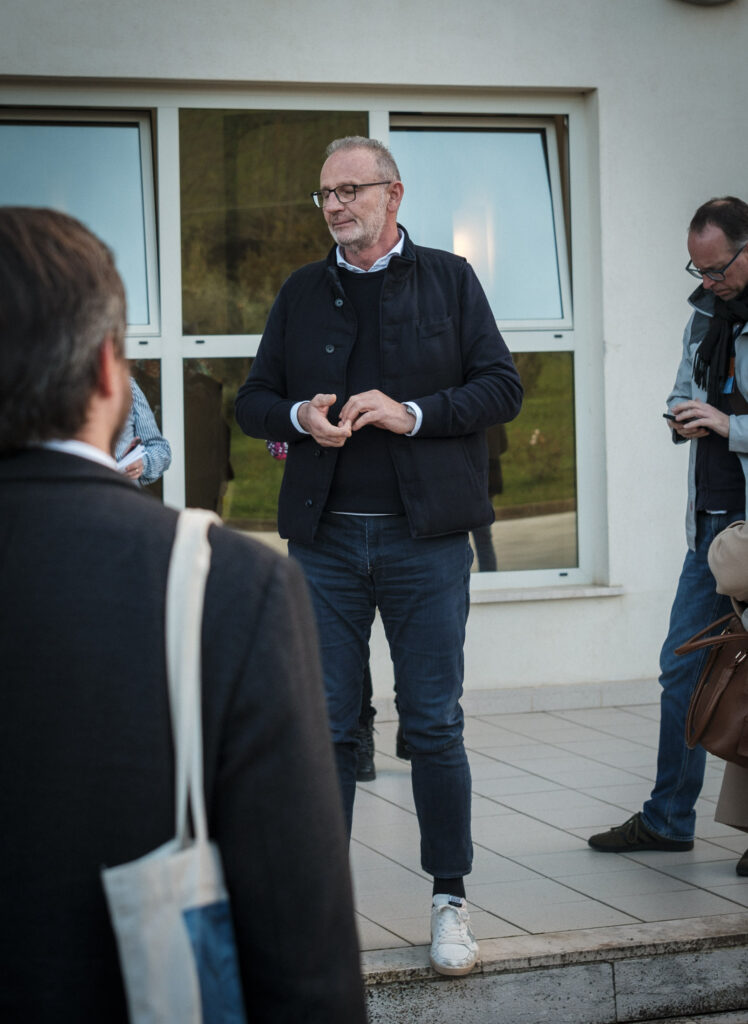
The minds behind the winery
Grégoire Desforgers belongs to the third generation of the Marzotto family, which for many years has taken responsibility for the winery’s development.
In 2023 the winery gained Dante Bonacina, a wine expert with an international reputation, known above all for his Italian champagnes, which he produced for many years for Ca’ del Bosco in Lombardy.
The oenologist Graziana Grassini completes the trio. The Tuscan entrepreneur, oenologist, and biologist is regarded as one of the most influential figures in the oenological world and ensures that only the finest quality is bottled.
The natural wine cellar
At Baglio di Pianetto they do not fight nature, but make measured use of it.
The hillside setting is ideal for this.
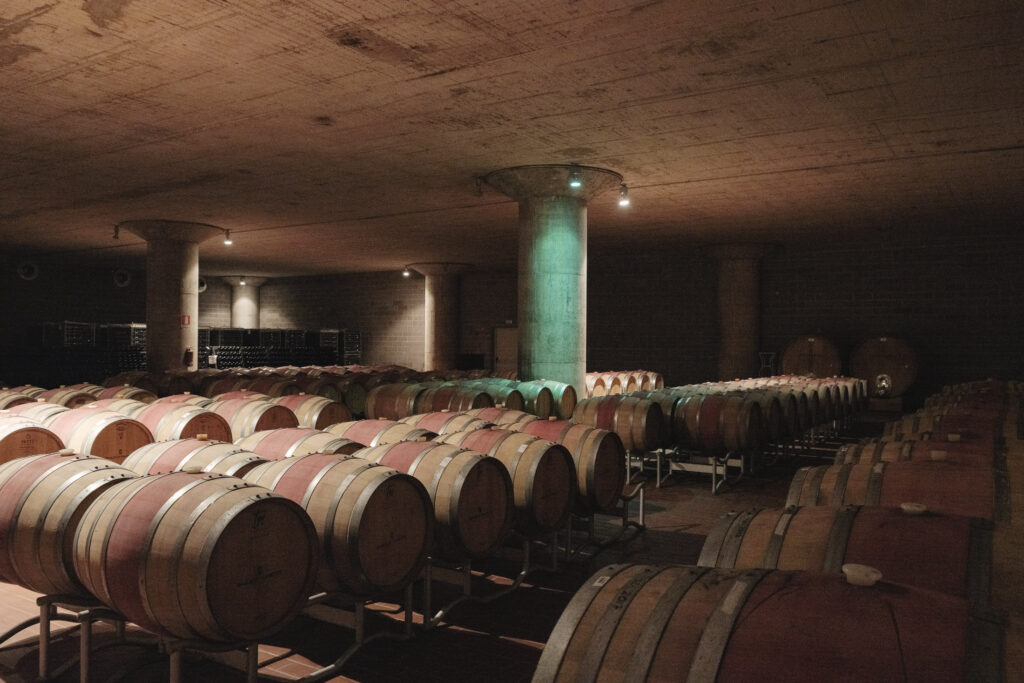
A large part of the facility lies underground, where the rock naturally stabilises the temperature. The cool stone walls protect the fermentation cellar, the barrel storage, and the ageing rooms from the heat of the day.
The Tasting
We were presented with a thoughtfully composed panorama of Baglio’s wines, all of them very good editions.
I was particularly impressed by the Insolia.
Citrus notes and floral accents are harmoniously balanced. The bouquet is further supported by hints of pink grapefruit, green apple, and turmeric. The elegant minerality reflects the position of the vines at 700 metres above sea level. The maturation here, too, follows biodynamic principles.
Excellent.
Tenuta Rapitalà
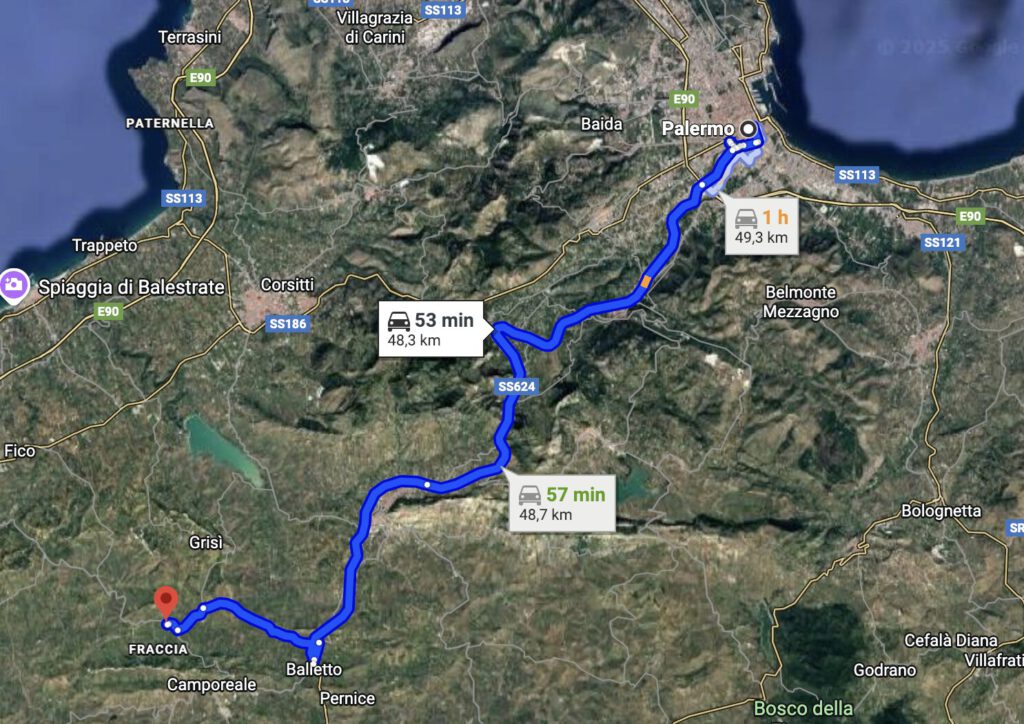
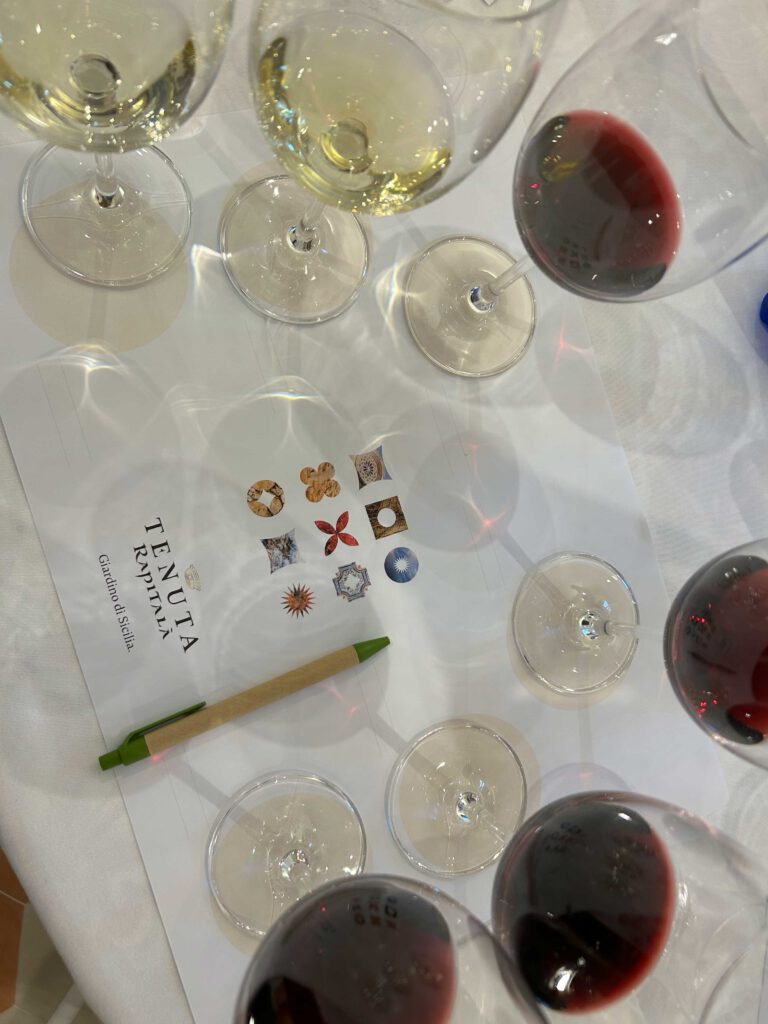
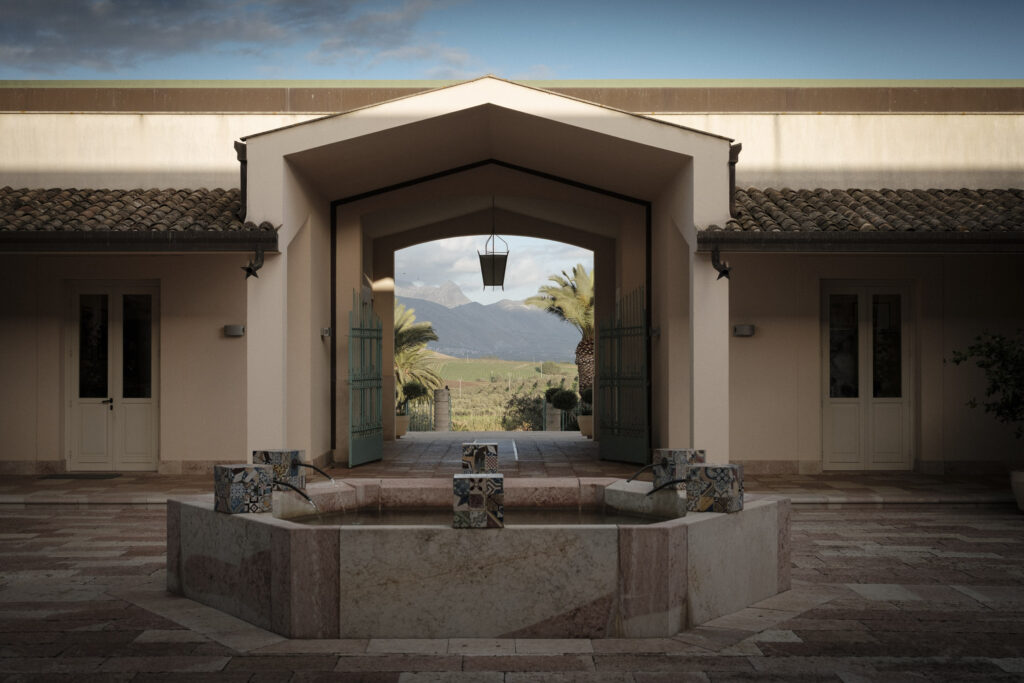
enuta Rapitalà is among the most renowned names in the Sicilian wine landscape and is a natural part of this press trip.
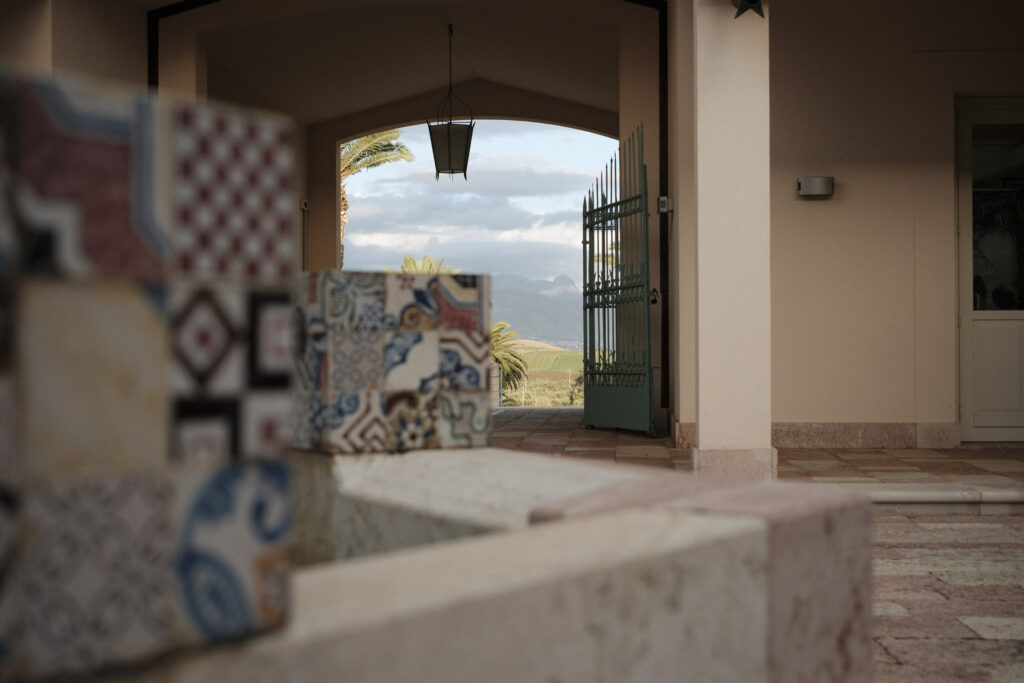
Entering the exceptionally elegant patio, you feel for a moment as if you were in Mexico.
The large gate opens onto the magnificent mountain landscape—impressive indeed.
The firm clay soil in the area retains moisture and ensures that the roots are always adequately supplied with water.
A French style is cultivated here, with Sicilian nuances.
Nadir, for example, is a signature wine of the Tenuta, a Syrah Sicilia DOC.
An intense ruby red with purple, damask-coloured reflections. On the nose it reveals a distinct aroma with the ripe fruit and spice typical of this variety, rounded by subtle notes of vanilla.
On the palate the wine is full yet refined, with soft, elegant tannins—a harmonious interplay of the characteristic depth of Syrah and the uniqueness of this exceptional terroir.
The wines of Tenuta Rapitalà are finely composed.
The harvest for this Syrah takes place in September, when the grapes have reached their ideal ripeness. It begins with a six-day cold pre-maceration, followed by traditional maceration and fermentation at 25 °C under controlled conditions. These procedures allow for optimal extraction of the aromas as well as the soft, palate-friendly tannins.
A part of the wine passes through malolactic fermentation in new, medium-toasted barriques. After several months of maturation it is added to the remaining wine, which then spends another year in stainless steel at 25 °C under controlled conditions.
The result is a fragrant, fresh wine with a distinct fruit character, retaining the structure and strength typical of Syrah in Sicily’s warm climate.
With 14% alcohol, it is more a wine for the evening, as a companion to good poultry, for example.
Anyone who appreciates wines with a French touch will be very well served by a bottle from Tenuta Rapitalà. Sustainability has a firm place there.
A dinner with the producers
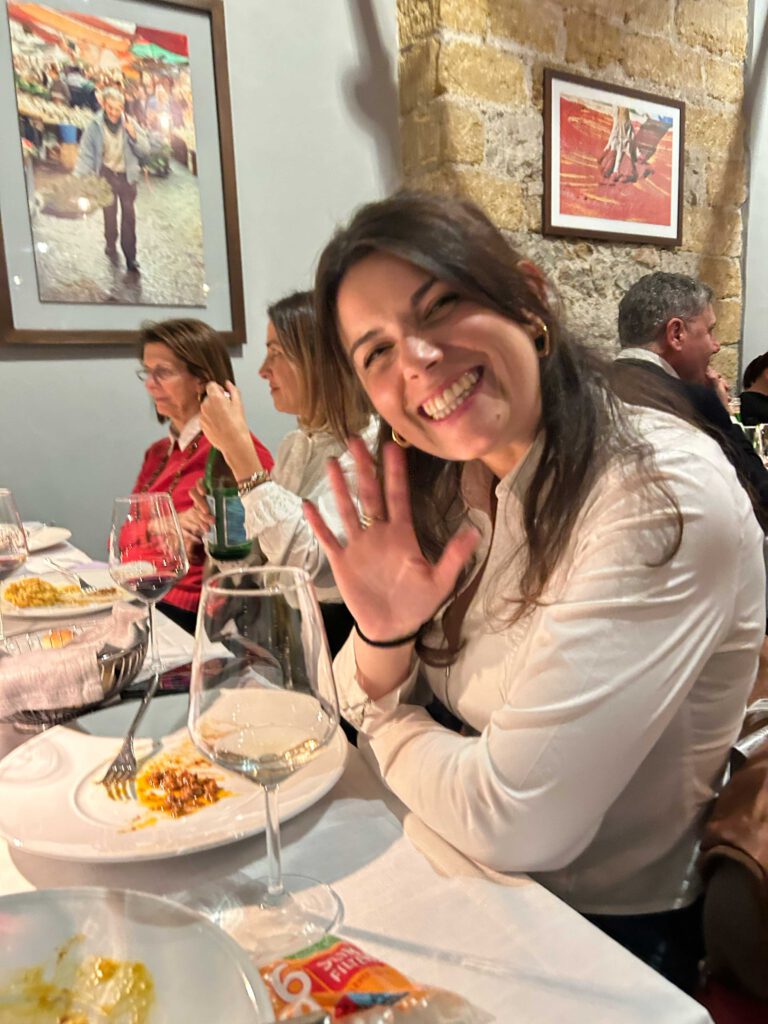
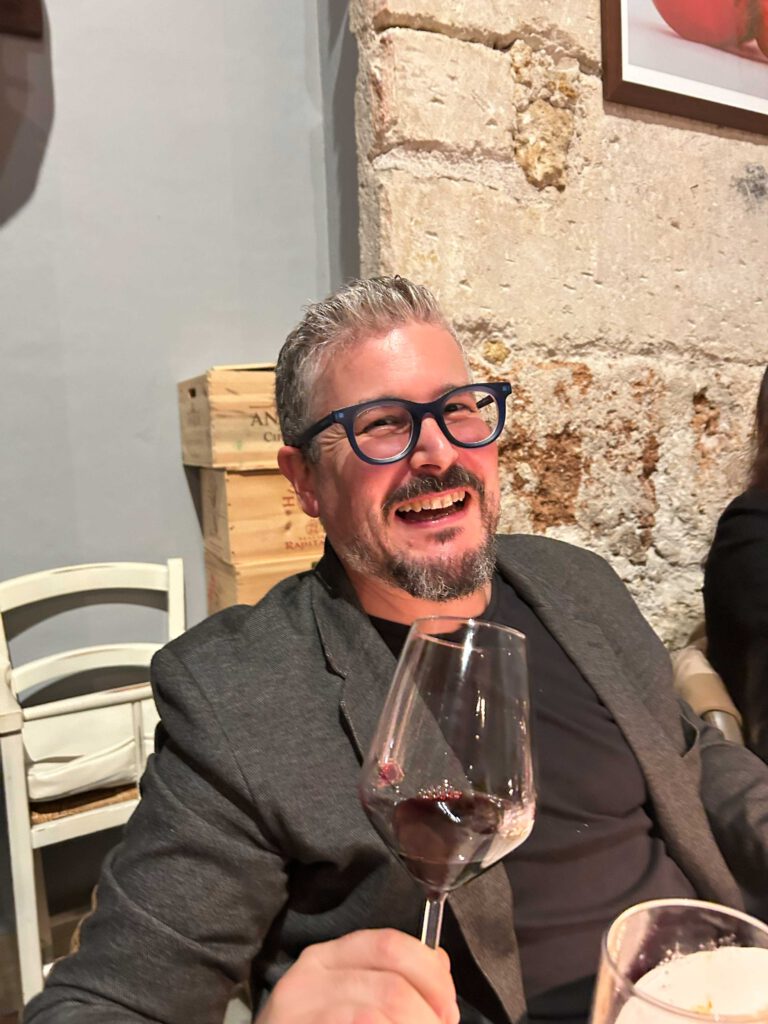
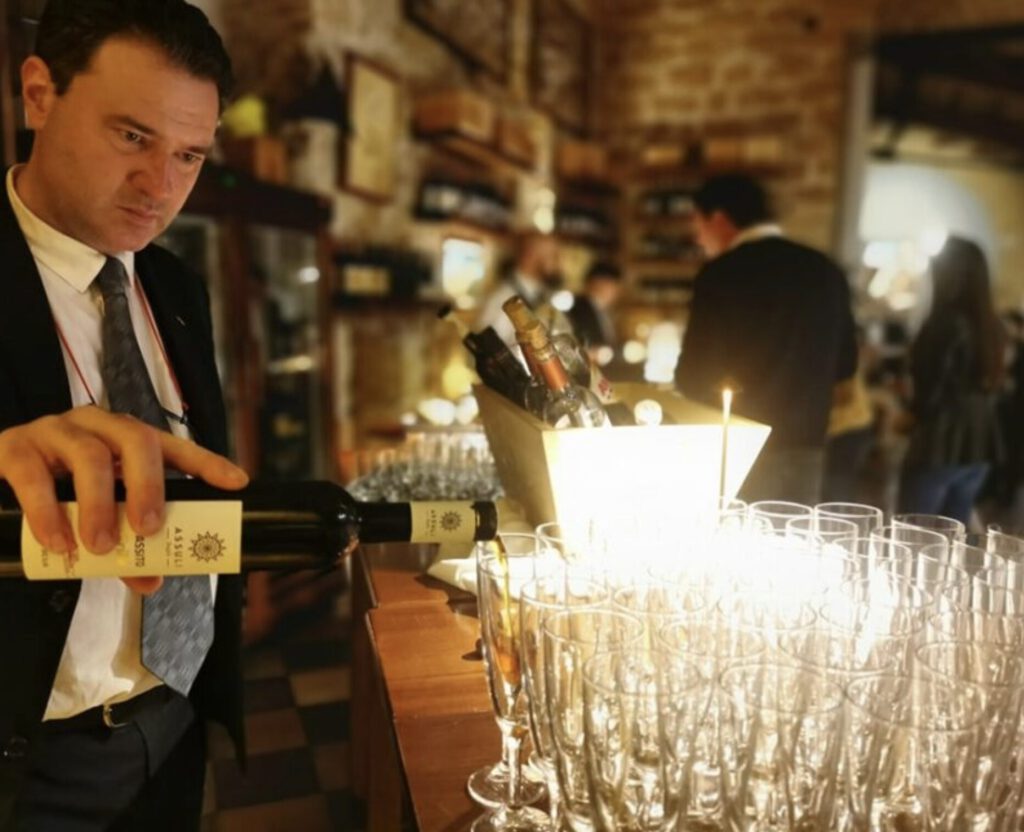
A dinner with the producers is part of the programme, allowing us to hear the voices of the winemakers.
We meet at Osteria Ballarò, a perfect location for such an event, right in the historic centre of Palermo. My neighbour at the table is the editor-in-chief of the long-established Spanish wine magazine La Semana Vitivinícola, Vicent Escamilla. Together we taste the wines presented to us by the producers or by the PR managers of the wineries.
I am particularly taken by the Catarratto from del Grillo, a family-run winery.
The Grillo family has been active in agriculture for three generations and has consistently relied on organic methods. A large part of their land is planted with vineyards in which only autochthonous varieties are cultivated. Other parts of the estate are devoted to olive groves of the Nocellara del Belìce and Cerasuola varieties; an extensive area serves as an orchard. A small part of the estate is also used for the cultivation of durum wheat.
Together with Vicent and the producers, we taste the wines according to my musical method.
The Catarratto from del Grillo immediately calls to mind the third movement of Felix Mendelssohn’s Violin Concerto in E minor, op. 64—pure joie de vivre. The work is a favourite of audiences and virtuosos alike.
Vicent, for his part, is quick to consider a Nero musically; after a brief moment of reflection, he passes me his glass with the words, “this is a bossa nova.” I have nothing to add.
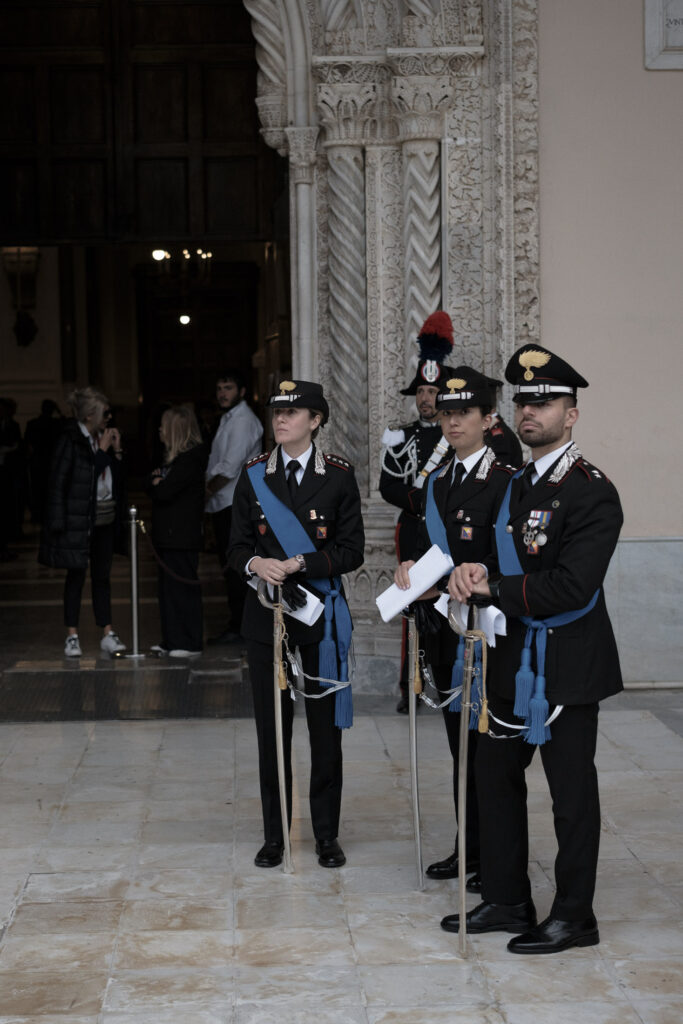
A good press trip. Our focus is on sustainable viticulture, as exemplified here. Sicily offers very good wine.
The island is a leader in biodynamic agriculture and viticulture in Italy; the message is clear: sustainability and respect for nature. This succeeds partly because the autochthonous varieties are suited to it, and partly because major challenges are tackled together.
The value for money is remarkable. A good Sicilia DOC wine comes at a pleasantly moderate price. This is appealing and shows how deeply wine culture is rooted in Sicilian society.
The journey was accompanied by distinguished experts, which made the masterclasses in particular highly valuable. The scientific approach was always evident, without overshadowing the friendly Sicilian character.
For my part, the wines on this beautiful island have stirred my curiosity—there is still much to discover.
BONUS: Hilary Hahn plays 3. Movement of Felix Mendelssohns Violinconcert E-Minor, Op.64